Top 5 Benefits of Modular Pod Construction in Healthcare
 Healthcare
 April 5, 2026
In this Article
|
Summary:
|
There’s been a noticeable shift in how healthcare projects are being discussed, not just in boardrooms, but on-site as well.
The main emphasis of work activities during previous years focused on design work together with extended planning processes. Current discussions tend to return to three main topics which include timeline management, disruption events, and the speed of facility readiness. The expectations have remained constant yet all restrictions have become more severe.
Hospitals remain operational because they cannot stop their services during construction work. Expansions often run alongside daily operations. Renovations happen a few feet away from patient care. That alone changes how construction needs to be approached.
The existing methods can successfully complete their required tasks. These methods create unpredictable results because the work involves multiple trades which depend on specific work sequences.
The increasing popularity of modular pod construction. The building requires practical modifications which serve as essential solutions for its most challenging sections.Once teams start working this way, the benefits of modular construction tend to show up fairly quickly.
What Modular Pod Construction Actually Means in Practice
It’s easy to describe modular in theory, but on a project, it’s less abstract.
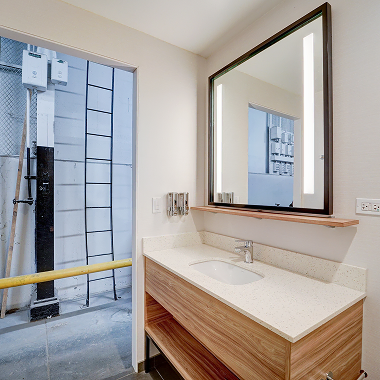
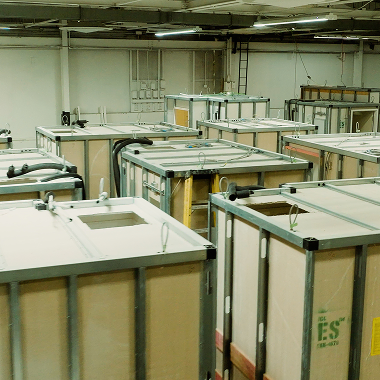
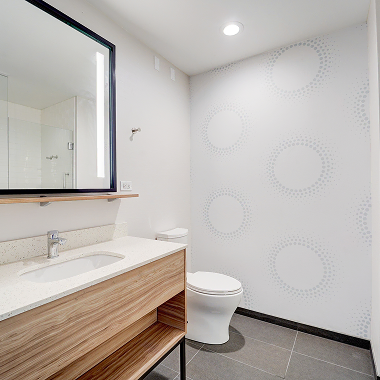
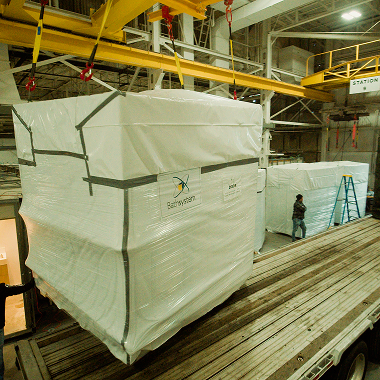
Instead of building everything in place, certain sections, like bathrooms or clinical rooms, are assembled in a factory. Not partially, but almost completely finished. Fixtures, fittings, internal systems, most of it is already in place before it ever reaches the site.
By the time a pod arrives, the job is closer to installation than construction.
You’ll usually see this approach used for:
- Bathroom pods
- Standard patient rooms
- Isolation units
- Smaller clinical or diagnostic spaces
Healthcare projects tend to benefit because they repeat a lot of similar layouts. That repetition makes it easier to standardize without compromising function.
Why Healthcare Teams Are Moving in This Direction
No single reason explains it. It’s more a combination of pressures that have been building for a while.
- Patient demand hasn’t slowed, especially in urban systems
- Projects are expected to move faster than before
- Compliance requirements continue to tighten
- Skilled labor is harder to secure, and harder to retain
Put all that together, and it becomes clear why teams are looking for ways to reduce uncertainty.
Pods don’t solve everything, but they remove some of the more difficult variables from the site.
Top 5 Benefits of Modular Pod Construction in Healthcare
1. Timelines That Actually Hold
One of the first differences teams notice is how the schedule behaves.
Traditional construction tends to move in layers, one trade finishes, another starts. If something slips, it affects everything that follows.
With modular pods, part of the work is happening elsewhere at the same time.
| Aspect | Traditional Build | Modular Pods |
|---|---|---|
| Workflow | Sequential | Parallel |
| Dependency on site conditions | High | Lower |
| Schedule variability | Frequent | Reduced |
This overlap shortens timelines, but more importantly, it makes them easier to rely on.
In healthcare, that can mean opening a wing earlier or bringing additional capacity online when it’s needed, not weeks later.
2. Costs That Don’t Drift as Much
Construction budgets rarely stay fixed. Labor shortages, delays, and rework all tend to push numbers upward.
Pods don’t eliminate those risks entirely, but they reduce how often they show up.
- Factory production uses materials more efficiently
- Labor is more consistent than on-site conditions
- Fewer interruptions from weather or access issues
You still need to manage costs carefully, but there are fewer surprises along the way.
3. Quality That’s Easier to Repeat
Consistency is one of those things that sounds simple but is difficult to maintain across large projects.
When bathrooms or clinical rooms are built one by one on-site, variations creep in. Small differences in alignment, finishing, or installation can add up.
Pods change that dynamic.
They’re built using the same process, under the same conditions, with repeated checks along the way.
- Fixtures are installed in controlled environments
- Systems are tested before delivery
- Units arrive with fewer unknowns
For healthcare, where compliance is non-negotiable, that level of consistency matters.
- Easier Expansion Without Starting Over
Hospitals rarely stay static. Demand changes, departments expand, new services are added.
With traditional construction, each expansion often feels like starting fresh.
Modular pods offer a different path.
- Designs can be reused and adapted
- Additional units can be produced without rethinking everything
- Expansion can happen in phases without major disruption
This makes it easier to respond to changing needs without long planning cycles each time.
5. Less Disruption Where It Matters Most
Construction inside or near an operating hospital is never straightforward.
Noise, dust, and movement all need to be controlled. Even then, they can affect staff and patients.
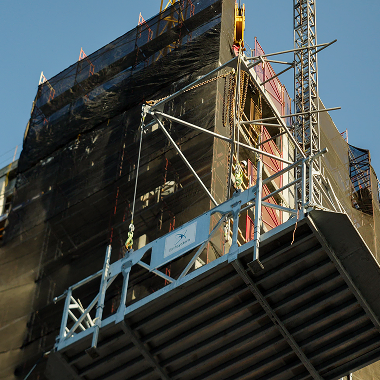
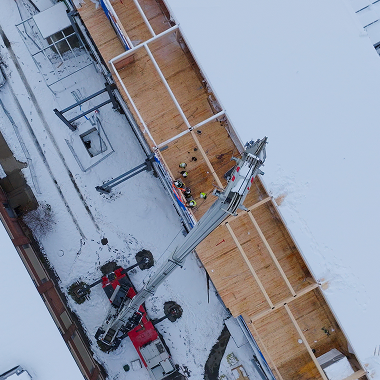
Since pods are built off-site, most of that activity happens away from the facility.
On-site work becomes shorter and more focused:
- Installation instead of full construction
- Fewer trades moving through the same areas
- Reduced overall disturbance
It doesn’t eliminate disruption entirely, but it reduces it to a more manageable level.
Where Pods Are Making the Most Impact
While modular can be applied in many areas, a few stand out in healthcare:
- Bathroom pods, where coordination is most complex
- Isolation units that need to be deployed quickly
- Diagnostic spaces with integrated systems
- Outpatient clinics that expand in phases
Each of these benefits from a controlled, repeatable approach.
Bathroom Pods: Often the Starting Point
Bathroom pods are usually where teams begin.
They bring together multiple trades, plumbing, finishes, electrical, into one unit. Handling all of that on-site can slow things down quickly.
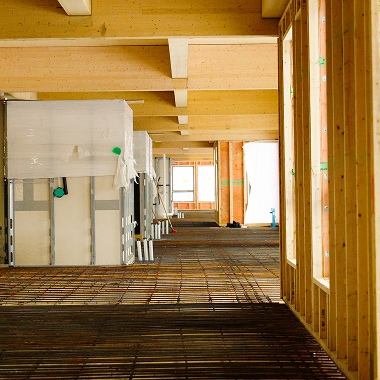
With a modular bathroom pod, much of that work is already done.
- Plumbing systems are pre-installed
- Finishes are completed in controlled settings
- Units arrive ready for placement
It’s a small part of the building in terms of size, but a significant one in terms of coordination. That’s why the impact is often noticeable.
A Few Misconceptions That Still Come Up
Even now, some concerns tend to surface early in discussions.
- “It won’t match the quality of site-built work”
In practice, factory conditions often lead to better consistency - “Design options are limited”
Designs are usually customized before production begins - “It’s only for temporary use”
Many modular healthcare spaces are built for long-term use
These points usually get resolved once teams see a project completed this way.
Looking Ahead
Modular construction isn’t replacing traditional methods, but it’s becoming a more regular part of the mix.
Healthcare, in particular, is likely to keep moving in this direction.
- Projects need to move faster
- Facilities need to adapt more easily
- Construction needs to be less disruptive
All of that aligns well with what modular pods offer.
A More Workable Approach for Modern Healthcare Projects
Healthcare construction doesn’t just need to deliver buildings, it needs to do so without slowing down the systems those buildings support.
That’s where modular pod construction fits in.
It reduces some of the pressure points that have become harder to manage, labor constraints, coordination issues, and unpredictable timelines, without introducing unnecessary complexity.
The benefits of modular construction aren’t theoretical at this stage. They’re showing up in how projects are planned, executed, and delivered.
Bathsystem USA contributes to this shift by providing modular bathroom pod solutions designed specifically for healthcare environments. With a focus on consistency, compliance, and practical installation, Bathsystem USA helps project teams build facilities that are easier to deliver, and easier to depend on over time.
Transform Healthcare Construction with Smarter Modular Solutions
If your next project needs to move faster without disrupting operations, modular pods are worth serious consideration.
FAQs
What are modular pods in healthcare construction?

They are fully assembled units—such as bathrooms or clinical spaces, built off-site and installed on-site.
What are the main benefits of modular construction in healthcare?
Faster timelines, better cost control, consistent quality, scalability, and reduced disruption.
Are modular healthcare buildings compliant with regulations?
Yes, they are designed to meet strict healthcare standards, including safety and hygiene requirements.
Can modular pods be customized?
Yes, they can be tailored to specific layouts, functions, and compliance needs.
Are modular pods suitable for permanent healthcare facilities?
Yes, they are widely used in long-term healthcare infrastructure projects.

Written By
Riccardo SciontiRicardo Scionti is the CEO of Bath System America (Bathsystem USA), a U.S.-based company built on European engineering and manufacturing expertise. He leads the growth of prefabricated bathroom and kitchen pod solutions across the United States, serving the hospitality, healthcare, and multifamily markets. With more than eight years of experience in the U.S. modular construction industry, Ricardo works closely with architects, developers, and general contractors to ensure every project is executed successfully. Supported by a highly skilled professional team, he is actively involved in every stage of the process, from design coordination to manufacturing and on-site integration—ensuring the highest standards of quality, precision, and speed to market. Through these blogs, Ricardo shares practical insights and real-world expertise to help shape the future of industrialized construction.
Related Blogs

Have a project in mind? We'd love to chat!
We’re redefining how our industrialized construction of modular bathroom pods and kitchen pods is delivered across the nation—with precision, reliability, and innovation built into every project.
Let’s build something exceptional together.