How the Shortage of Prefabricated Manufacturers Is Quietly Reshaping Hospital Construction
 Guides
 March 30, 2026
In this Article
Summary:
|
There’s a moment in most hospital projects today when the conversation shifts.
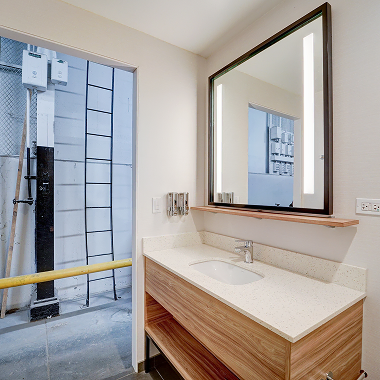
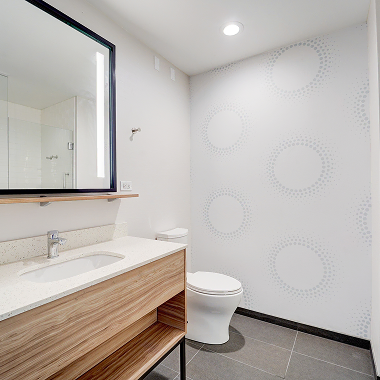
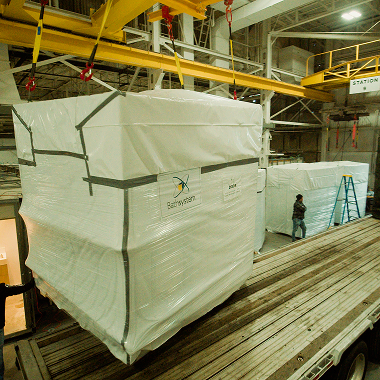
It usually starts with timelines, how to shorten them, and how to make them more predictable. Then Prefab Manufacturers in Hospitals comes up. Bathroom pods, MEP racks, modular rooms. The usual discussion follows: speed, quality, fewer people on-site.
And then, almost quietly, someone asks: “Have we checked with manufacturers yet?”
That question didn’t carry much weight a few years ago. Now, it does.
Because while demand for prefab has moved quickly, the number of prefabricated manufacturers, at least those capable of handling complex healthcare work, hasn’t kept up in the same way.
It’s not a crisis. But it is changing how projects move forward.
Why Hospitals Turned to Prefabrication in the First Place
Hospitals don’t have the luxury of slow construction cycles. Delays don’t just affect budgets; they affect operations, patient access, and revenue timelines.
That’s one of the reasons prefabrication found its way into healthcare projects in a meaningful way.
It offers a few things that are hard to ignore:
- Work that can happen off-site while the structure goes up
- Fewer trades overlap in tight spaces
- A level of consistency that’s difficult to achieve on-site
For facilities with repeated room types, patient rooms, bathrooms, and exam spaces, it just makes sense.
But the more it makes sense, the more people use it. And that’s where things start to tighten.
The Supply Side Isn’t Keeping Up
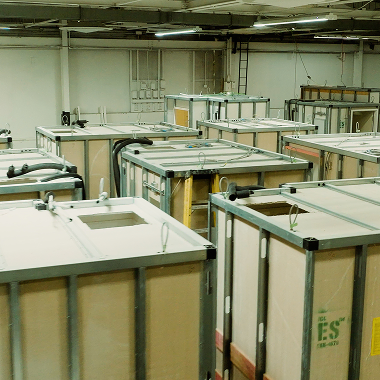
Setting up a prefabrication facility isn’t simple. It requires capital, skilled labor, logistics, and a steady pipeline of work to justify the investment.
At the same time, healthcare isn’t the only sector leaning into prefab. Residential developers are using it to address housing shortages. Hospitality projects rely on it for speed. Even infrastructure and data center builds are pulling from the same pool.
So what you get is a fairly straightforward imbalance:
| Reality | What It Means in Practice |
|---|---|
| Demand rising across sectors | More competition for manufacturing slots |
| Limited expansion of facilities | Capacity gets booked early |
| Specialized expertise required | Fewer players in healthcare-grade prefab |
None of this stops projects. But it does mean one thing: timing matters more than it used to.
What’s Actually Changing on Projects
Decisions Are Happening Sooner
There was a time when teams could keep options open well into the design phase. That flexibility doesn’t translate well to a manufacturing model.
Now, decisions that used to happen later, like layout approvals and system selections, are moving up.
It’s not always comfortable. But once those decisions are made, things tend to move more smoothly.
Procurement Feels Less Like Procurement
Another shift is less obvious but just as important.
Teams aren’t just “selecting vendors” anymore. They’re forming working relationships with prefabricated manufacturers, sometimes across multiple projects.
It’s less about finding the lowest bid and more about:
- Who can actually deliver
- Who understands healthcare requirements
- Who can stay aligned over time
That kind of continuity reduces friction. And right now, it’s becoming a practical necessity.
Standardization Is Getting a Second Look
Standardization in healthcare design has always been a bit of a balancing act. Too much of it, and you risk losing flexibility. Too little, and projects become harder to manage.
The current environment is nudging that balance.
More teams are comfortable repeating elements, especially where it doesn’t compromise functionality. Bathrooms are a common example. So are patient room layouts.
It’s not about removing design intent. It’s about making sure what’s designed can actually be built—on time, and without unnecessary complications.
Not Everything Needs to Be Prefabricated
Interestingly, the shortage has made teams more selective, not less interested.
Instead of pushing prefab everywhere, they focus on where it makes the biggest difference. Usually, that’s anything tied to coordination-heavy work or critical path activities.
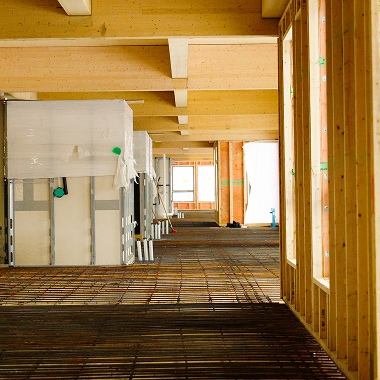
Bathroom pods come up often. So do MEP systems. These are areas where off-site construction tends to reduce both time and headaches.
Planning Is Doing More Heavy Lifting
If there’s one thing this shift has made clear, it’s that prefabrication rewards preparation.
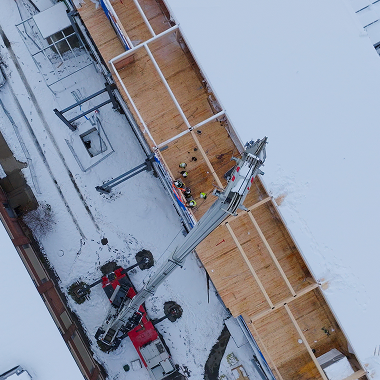
Projects that integrate manufacturers early, align schedules properly, and think through logistics tend to benefit the most.
Projects that treat prefab as a late-stage add-on usually don’t.
That’s not a flaw in the method; it’s just how the process works.
What Different Teams Are Noticing
General contractors often talk about a different kind of workload. Less chaos on-site, but more coordination upfront.
Architects find themselves making decisions earlier, sometimes with direct input from manufacturers.
Developers, on the other hand, are mostly focused on outcomes. Faster delivery. Fewer surprises. Better predictability.
Each group feels the shift differently, but the direction is the same.
The Challenges Are Real, But Manageable
There are trade-offs.
Less flexibility later in the process.
More pressure to commit earlier.
A bit more dependence on external production timelines.
But most teams aren’t seeing these as deal-breakers. They’re just part of a different way of working.
And once the process is understood, those constraints become easier to manage.
A Broader Shift in How Hospitals Are Built
Stepping back, this isn’t just about a shortage.
It’s part of a larger movement, one where construction starts to look a bit more like manufacturing. More planning upfront. More control during execution. Fewer variables on-site.
Healthcare, given its complexity, was always likely to move in this direction.
The current constraints are simply speeding things along.
Turning Constraint into Competitive Advantage
The shortage of prefabricated manufacturers isn’t halting progress in hospital construction. If anything, it’s making the process more intentional.
Projects are being planned with more clarity. Partnerships are being treated with more importance. Design decisions are happening with delivery in mind, not just aesthetics or compliance.
That shift may feel subtle, but its impact is significant.
Bathsystem USA operates within this evolving landscape by delivering engineering-led modular solutions that fit how projects actually move today. With a focus on precision, compliance, and repeatability, Bathsystem USA supports healthcare teams looking to build with more certainty, even as demand for prefabrication continues to grow.
FAQs
What are prefabricated manufacturers?

They are companies that build construction components off-site, such as bathroom pods or system modules, for installation during the main build.
Why are they in short supply?
Demand has increased quickly across multiple sectors, while expanding manufacturing capacity takes time and investment.
Does this slow down hospital construction?
It can if manufacturers are brought in late. Projects that plan early tend to avoid major delays.
Is prefabrication still worth considering?
Yes. Even partial use can simplify construction and improve timelines.
How are teams adapting to this shortage?
Mostly by engaging earlier, simplifying designs, and building longer-term relationships with manufacturing partners.

Written By
Riccardo SciontiRicardo Scionti is the CEO of Bath System America (Bathsystem USA), a U.S.-based company built on European engineering and manufacturing expertise. He leads the growth of prefabricated bathroom and kitchen pod solutions across the United States, serving the hospitality, healthcare, and multifamily markets. With more than eight years of experience in the U.S. modular construction industry, Ricardo works closely with architects, developers, and general contractors to ensure every project is executed successfully. Supported by a highly skilled professional team, he is actively involved in every stage of the process, from design coordination to manufacturing and on-site integration—ensuring the highest standards of quality, precision, and speed to market. Through these blogs, Ricardo shares practical insights and real-world expertise to help shape the future of industrialized construction.
Related Blogs


Have a project in mind? We'd love to chat!
We’re redefining how our industrialized construction of modular bathroom pods and kitchen pods is delivered across the nation—with precision, reliability, and innovation built into every project.
Let’s build something exceptional together.