Best Small Modular Bathroom Design Ideas for Compact Spaces
 Guides
 March 5, 2026
In this Article
Summary
- Planning is necessary to achieve tight bathroom footprints.
- Effective layouts enhance circulation, comfort, and utility.
- In small areas, clever design decisions increase visual openness.
- Offsite production allows for precision in the design of small modular bathrooms.
- Consistency and fewer on-site disputes are guaranteed by standardized layouts.
- Performance-driven materials promote long-term dependability and durability.
- The outcome is small restrooms that are functional, cozy, and efficient.
The hospitality industry and multifamily housing and urban development projects experience identical difficulties because they must operate within restricted areas while maintaining high performance standards. All bathrooms need to provide two essential elements, which include user comfort, design durability, and high-quality design standards.
The bathroom design process now employs engineering methods to create bathroom spaces that require complete planning and design work from project initiation. The implementation of small modular bathroom design creates three essential benefits, which include predictable operational patterns and efficient resource management throughout limited space environments.
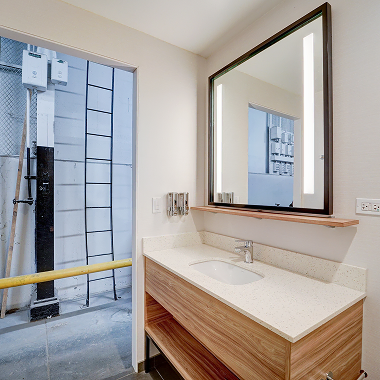
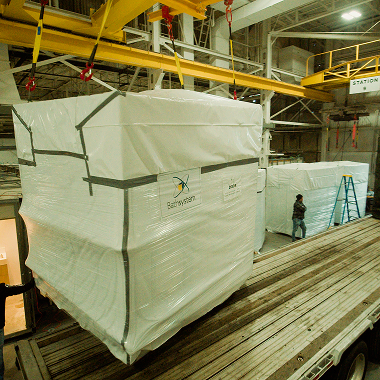
The small modular bathroom design demonstrates its unique value through this particular aspect. The construction process begins with prefabricated systems, which enable complete resolution of layout, service, and clearance requirements, resulting in reduced site problems and improved consistency. Global hotel brands use bathroom pods to maintain uniform standards across hundreds of rooms, and guests simply notice that everything works as it should.
Market spectator: Global hotel brands use bathroom pods
Understanding Small Modular Bathroom Design
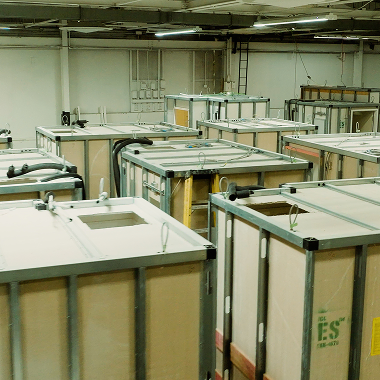
A modular bathroom functions as a complete bathroom unit that construction workers create in their facilities and later deliver to job sites for assembly work.
The method proves its value in projects that need to be completed within limited space constraints.
At a glance, modular bathrooms look simple. Behind the scenes, they rely on early coordination, precision manufacturing, and rigorous testing to make compact spaces work seamlessly.
- A modular bathroom is a fully built, self-contained unit manufactured off-site and delivered ready for installation.
- All dimensions, layouts, and service connections are finalized early, reducing on-site clashes and rework.
- Architects and engineers work with fixed, repeatable layouts that align with structure, vertical stacking, and MEP systems.
- This approach is especially effective in tight footprints, where precision matters most.
- Pods are permanent, code-compliant building elements, not temporary assemblies.
- Each unit is tested and quality-checked in a controlled factory environment before delivery.
- The result is a bathroom that is accurate, consistent, and ready to perform from day one.
The design of these pods functions as a permanent building solution through their construction as code-compliant elements of the building. The elements are permanent building parts that comply with United States building codes while fulfilling project requirements through their production and testing process.
The essential elements of bathroom design operate through exact bathroom creation methods, which use intelligent design to develop bathrooms that function properly in their limited spaces.
Smart Layout Planning for Compact Modular Bathrooms
Every area in compact bathrooms holds significance for bathroom design. The comfort and accessibility of a space depend on its small layout modifications, which affect its daily operational functions.
The planning process needs to start before the team establishes the final project specifications. The team must analyze how people interact with the space through their entry, movement, and usage of each fixture. The functional perspective of the space shows him issues that the drawings do not display.
The simple zoning system establishes two separate areas that maintain organization throughout the entire space. All elements, which include doors and fixtures, require precise alignment with accessibility requirements. This system enables modular operations through its pre-engineered design, which minimizes necessary site modifications.
The layout provides a framework that designers can duplicate across multiple units to achieve identical results while maintaining project deadlines.
Space-Saving Fixtures That Make a Big Difference
In smaller bathrooms, every fixture matters. The right choices can free up space, improve circulation, and make the room feel far more comfortable than its size suggests.
- Wall-hung toilets
The combination of in-wall cisterns and elevated floor height creates a more compact design, which simplifies the cleaning process.
- Floating or slim-profile vanities
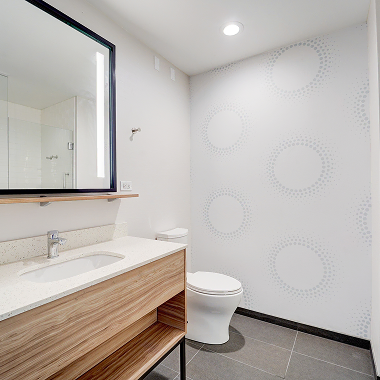
The design of lighter vanities creates an open visual effect while maintaining the required storage space and built-in sinks.
- Slim shower enclosures and linear drains
The installation of frameless glass panels together with low-profile drainage systems creates a layout that maintains both cleanliness and spatial efficiency.
- Frameless glass panels
The transparent design of frameless glass panels enables people to see through to the other side, which creates the effect of greater space in small bathrooms.
- Pocket or sliding door systems
The removal of door swing requirements results in better movement flow and increases the amount of space that can be used.
- Integrated, compact storage solutions
The built-in shelving and hidden storage solutions provide functional space while maintaining a compact appearance.
Storage, Light, and Visual Expansion Techniques
The right fixtures can dramatically improve how a compact bathroom feels and works.
Wall-hung toilets reduce visual bulk by concealing the cistern and freeing up floor space, which also makes cleaning easier. Floating or slim-profile vanities create openness while still offering essential storage and integrated basins.
Frameless glass panels, slim enclosures, and linear drains maintain a clean, continuous look in the shower area while providing effective drainage and space-saving design.
Door choice matters too. Modular layouts prefer pocket or sliding systems over hinged doors because the latter require space for door movement while maintaining smooth movement throughout the area.
The small individual choices lead to a greater impact because they enhance the comfort and functionality of a compact bathroom space.
Sustainability and Performance in Small Modular Bathroom Design
Sustainability is essential for large developments because it determines their operational expenses, their ability to meet regulations, and their future asset worth.
The modular bathroom systems help achieve these objectives through their real-world implementation. The water-saving fixtures, which include low-flow toilets and faucets, lead to decreased water usage throughout the building. The use of durable moisture-resistant materials together with controlled factory installation processes results in reliable performance that helps to minimize leakages and premature material degradation.
The manufacturing process generates less waste because it produces components according to precise requirements instead of cutting materials on location. The small modular bathroom design enables construction projects to achieve two essential goals, which include protecting the environment and maintaining operational efficiency.
Where Efficiency, Comfort, and Smart Engineering Meet
The compact bathrooms that architects design to work as functional spaces create spaces that appear to have been designed with a definite purpose.
The modular thinking approach empowers teams to create efficient bathroom systems because it enables them to address all design and construction requirements at the beginning of their work.
This approach delivers clear advantages across hospitality, multifamily, healthcare, and student housing or student hostel accommodation projects supporting faster completion, consistent quality, and reduced construction risk—an approach consistently delivered by Bathsystem USA.
The design process requires accuracy because space resources become limited. Small modular bathroom design achieves its goal through design, which creates a proper balance between efficient operations, comfortable experiences, and lasting performance.
Designing compact bathrooms for a hotel, multifamily, or healthcare project? Bathsystem USA works with architects, engineers, and developers to deliver fully engineered modular bathroom solutions that integrate seamlessly into your project.
FAQs
The bathroom unit functions as a complete bathroom system that construction workers build at their facility before they deliver it to locations with limited space.
The two spaces receive use of this system because it maintains quality throughout installation while delivering fast results.
The system functions with accurate building designs that control space while preventing design problems from happening.
The project requirements allow all design elements to be modified, which includes layouts, finishes, fixtures, and accessibility elements.
The bathroom system achieves sustainable design through its use of water-saving fixtures and long-lasting materials, and its ability to decrease building waste.

Written By
Riccardo SciontiRicardo Scionti is the CEO of Bath System America (Bathsystem USA), a U.S.-based company built on European engineering and manufacturing expertise. He leads the growth of prefabricated bathroom and kitchen pod solutions across the United States, serving the hospitality, healthcare, and multifamily markets. With more than eight years of experience in the U.S. modular construction industry, Ricardo works closely with architects, developers, and general contractors to ensure every project is executed successfully. Supported by a highly skilled professional team, he is actively involved in every stage of the process, from design coordination to manufacturing and on-site integration—ensuring the highest standards of quality, precision, and speed to market. Through these blogs, Ricardo shares practical insights and real-world expertise to help shape the future of industrialized construction.
Related Blogs
Have a project in mind? We'd love to chat!
We’re redefining how our industrialized construction of modular bathroom pods and kitchen pods is delivered across the nation—with precision, reliability, and innovation built into every project.
Let’s build something exceptional together.